Diamond Quality Guide
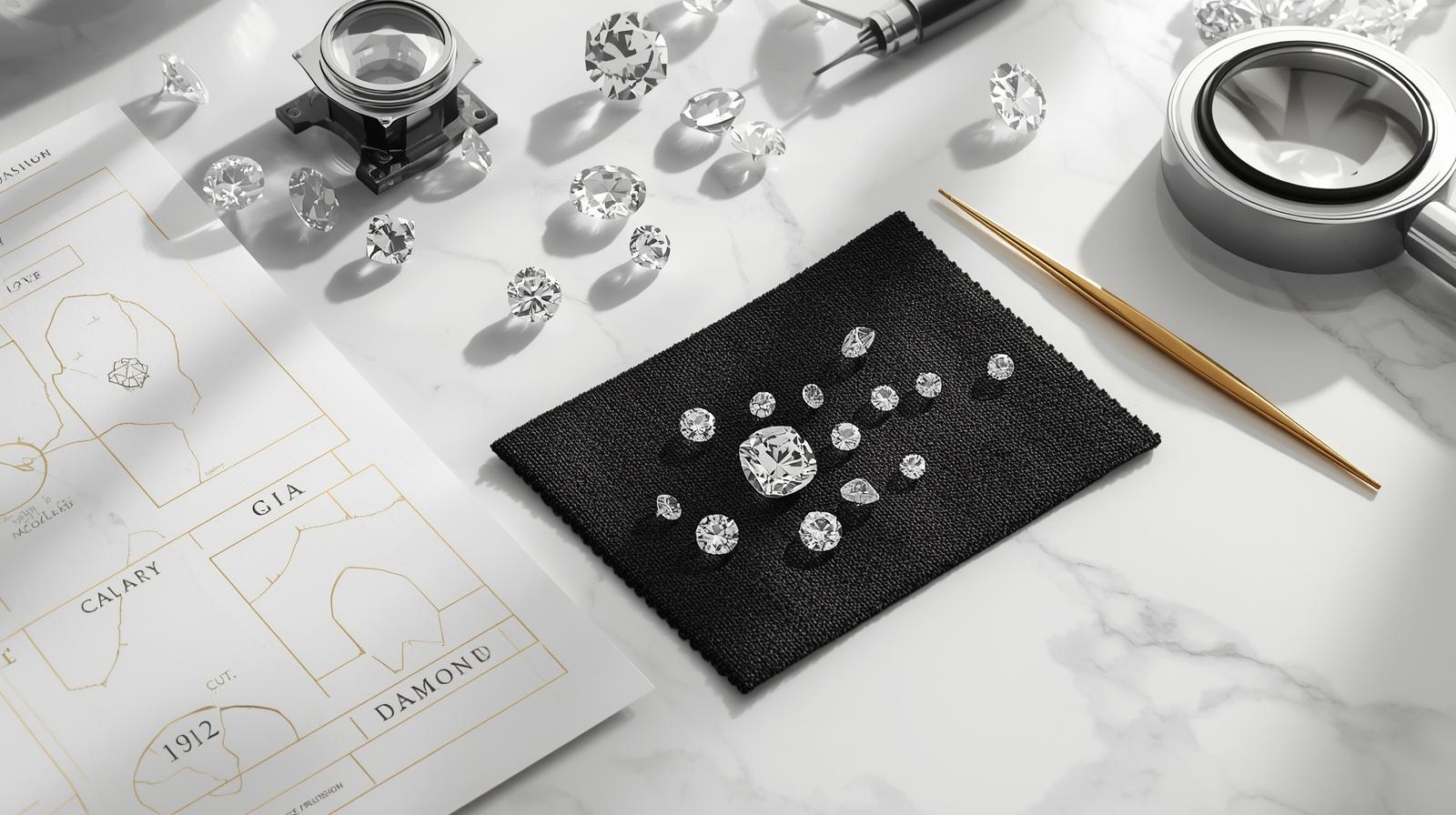
In this article, we explain how to determine diamond quality and what you should pay attention to when choosing a piece of jewelry.
What Determines Diamond Quality: the 4C Rule
Worldwide, diamond quality is evaluated using the international 4C system:
Cut – the quality of the cut
Color – the color grade
Clarity – the level of inclusions and blemishes
Carat – the weight in carats
The combination of these characteristics determines both the price and the visual beauty of a diamond.
Cut — the Main Factor Behind Brilliance
The cut determines how beautifully a diamond reflects light.
Even a stone with excellent color and clarity can look dull if the cut is poor.
Pay attention to the following cut grades:
Excellent / Ideal – maximum brilliance
Very Good – very strong light performance
Good – acceptable level
Fair / Poor – weak sparkle
Cut is one of the most important factors when choosing a diamond.
Diamond Color
Most diamonds have a slight natural tint — from completely colorless to faint yellow.
The color scale is usually indicated by letters:
D–F – colorless
G–J – near colorless
K and below – noticeable color
The closer a diamond is to grade D, the higher its value.
Clarity
Clarity shows the presence of internal inclusions and external blemishes.
Main clarity categories include:
FL / IF – flawless or internally flawless
VVS / VS – very small inclusions
SI – inclusions visible under magnification
I – imperfections visible to the naked eye
For everyday jewelry, VS or SI grades often offer the best balance between price and appearance.
Carat Weight
Carat refers to the weight of a diamond, not its visible size.
1 carat = 0.2 grams.
It is important to understand that two diamonds with the same carat weight can look different in size depending on their cut proportions and shape.
Certification — Your Guarantee of Authenticity and Quality
When purchasing a diamond, always ask for a certificate.
The most respected gemological laboratories are:
GIA
IGI
HRD
A certificate confirms all key characteristics of the stone and verifies its natural origin.
Diamond Shape and Its Impact on Appearance
In addition to the classic round shape, there are many other popular diamond shapes:
oval — often looks larger visually
princess — a modern square shape
emerald — highlights the clarity of the stone
pear, marquise, cushion — distinctive designer shapes
The shape influences not only the overall style of the jewelry, but also how large the diamond appears.
Practical Tips for Choosing a Diamond
Before making a purchase, we recommend that you:
view the diamond under different lighting conditions;
compare several stones side by side;
focus on the full 4C parameters, not only carat weight;
choose a trusted and reputable seller.
How to Choose the Right Diamond for You
There is no single “perfect” diamond for everyone.
For some buyers, size is the top priority. For others, clarity or exceptional brilliance matters most.
A smart choice is always a balance between the 4C characteristics, the jewelry design, and your budget.
Diamond Quality Is More Than Just Numbers
The true value of a diamond lies in its sparkle, harmony of proportions, and the emotions it creates.